
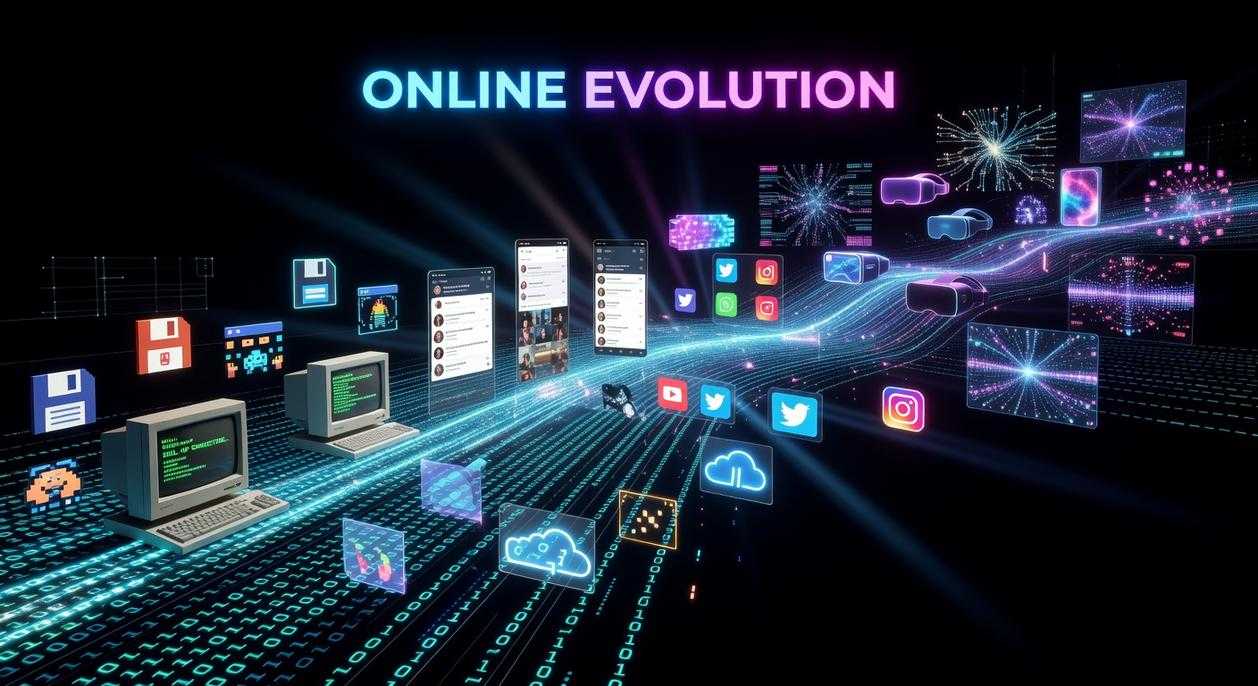
How did we move from the screech of dial-up modems to a world where algorithms anticipate our thoughts? This article maps that transformation, tracing online behavior from anonymous chatrooms and early forums to today’s hyper-personalized, data-driven platforms. The pace of change has been so rapid that many struggle to understand why we interact the way we do—or how major internet culture shifts took hold so quickly. By breaking down complex technological advances into clear patterns of human behavior, we provide a coherent timeline of our digital evolution and explain the forces shaping our identities, communities, and interactions online today.
The Era of Anonymity: Forums, Chat Rooms, and Early Digital Tribes
As the landscape of internet culture evolves, with new trends influencing everything from social media interactions to online gaming communities, it’s also essential to ensure your digital experience is seamless—after all, there’s nothing more frustrating than trying to join a viral conversation while grappling with Wi-Fi connectivity issues, which you can learn to diagnose and resolve effectively in our detailed guide – for more details, check out our How to Diagnose and Resolve Wi-Fi Connectivity Issues.
The early web (1990s–early 2000s) was defined by text-based, community-driven platforms like IRC, Usenet, and vBulletin forums. Unlike today’s algorithmic feeds, these spaces were structured around threads and channels, not timelines. According to Pew Research (2000), nearly 90% of internet users participated in email or discussion groups—clear evidence that conversation, not broadcasting, drove engagement.
Behavioral Driver: Exploration
Online identity functioned as a construct—a deliberately crafted persona separate from offline life. Anonymity lowered social risk, encouraging experimentation and candid dialogue (the digital equivalent of trying on different jackets to see what fit). Psychologists Suler (2004) described this as the “online disinhibition effect,” explaining why users shared more openly in anonymous settings.
- Niche Linux troubleshooting groups
- Obscure anime theory threads
- Hyper-specific hobbyist communities
These weren’t side features—they were the point.
Key Trend: Information Seeking
The dominant behavior was active knowledge exchange. A 2001 UCLA Internet Report found that users ranked “finding information” as their top reason for going online.
Interaction Model
Communication was asynchronous and long-form. Threads unfolded over days, even weeks, fostering depth over speed—before internet culture shifts in the section once exactly as it is given became the norm. (Yes, patience was once a feature, not a bug.)
The Rise of the Profile: How Social Media Redefined Online Identity
The Social Graph and the Performance of Self
Between the mid-2000s and mid-2010s, platforms like Facebook, MySpace, and early Twitter rewired the internet’s architecture around the social graph—a digital map of real-world relationships. Unlike anonymous forums or pseudonymous chatrooms, these platforms tethered accounts to authentic names, faces, schools, and workplaces. Your online identity was no longer a mask; it was a mirror.
Some argue this shift made the web safer and more civil. After all, real names can discourage bad behavior (the “Grandma test” effect—would you post it if she could see it?). But that same transparency introduced a new behavioral driver: social validation. Likes, comments, retweets, and friend counts became measurable units of approval—what sociologists call social capital, meaning the value derived from your relationships and reputation (Ellison, Steinfield & Lampe, 2007).
- Profiles evolved into highlight reels.
- Metrics became proxies for worth.
- Reach often replaced depth.
This birthed the era of the personal brand. Users curated timelines with graduation photos, vacation albums, and career milestones, shifting away from niche fandom posts toward broadly appealing updates. Broadcasting to hundreds—or thousands—of connections became the norm, prioritizing visibility over intimacy.
What competitors often miss is how this design subtly trained algorithmic literacy. Users learned to post at optimal times, tailor tone for engagement, and adapt to internet culture shifts. In effect, everyone became a micro-marketer (whether they realized it or not).
The profile wasn’t just a page. It was a stage—and we were all performers.
The Algorithmic Feed: From Active Connection to Passive Consumption
The Rise of the ‘For You’ Era
Scroll TikTok for five minutes and you’ll hear someone say, “HOW does it know me this well?” That reaction captures the Algorithmic Era. Platforms like TikTok, Instagram Reels, and YouTube no longer rely primarily on who you follow. Instead, AI-driven feeds—systems that use machine learning models to predict what you’ll watch next—dictate discovery.
Unlike earlier social networks built around your friend graph, today’s “For You” page studies behavior: watch time, replays, pauses, even micro-interactions. According to a 2023 Pew Research Center report, 67% of teens use TikTok, and many describe it as “addicting” due to its personalized stream. That’s not accidental.
One college student told a researcher, “I open the app to check one video, and suddenly it’s an hour later.” That’s the dopamine loop at work—dopamine being the neurotransmitter linked to reward and anticipation. The primary goal is no longer connection. It’s ENTERTAINMENT.
Critics argue this shift democratizes content. “Anyone can go viral now,” creators often say. True. AI can amplify unknown voices overnight. But it also accelerates internet culture shifts, creating micro-cultures—small, hyper-specific communities that form around niche interests. Trends that once lasted months now burn out in days.
This creates filter bubbles, digital environments where algorithms mostly show content aligning with your existing preferences (and rarely challenge them). The interaction model has shifted from posting and commenting to scrolling and consuming.
If you want to understand why certain clips explode while others vanish, study the psychology of social sharing and why content spreads. Because in the Algorithmic Era, the feed doesn’t just reflect culture—it actively shapes it.
The next decade of online interaction will be shaped by three converging forces: AI, immersive environments, and decentralization. AI-mediated relationships are no longer fringe. A 2024 Pew survey found 38% of U.S. adults have interacted with an AI chatbot for advice or companionship, signaling normalization. Startups offering AI companions report millions of users, evidence that emotional outsourcing is moving mainstream (think Her, but in your pocket).
Meanwhile, immersive platforms are capitalizing on internet culture shifts, blending gaming, work, and social life into digital spaces.
Quantum computing introduces risk. Researchers at NIST warn that powerful quantum machines could break RSA encryption, threatening banking, messaging, and identity systems.
In response, users are exploring decentralized models:
- Blockchain-based identity wallets
- Federated social networks like Mastodon
- End-to-end encrypted protocols
Advocates argue decentralization restores control; skeptics cite usability hurdles. Still, adoption growth suggests trust is becoming programmable rather than presumed. Learn at https://example.com.
Navigating the Ever-Shifting Digital Landscape
From anonymous communities to curated profiles and now to algorithmic content streams, the web has continually reshaped how we connect and express identity. Our online behaviors mirror the systems that guide them, revealing how architecture drives action. Understanding these internet culture shifts is essential as AI and quantum technologies redefine the next digital frontier.